
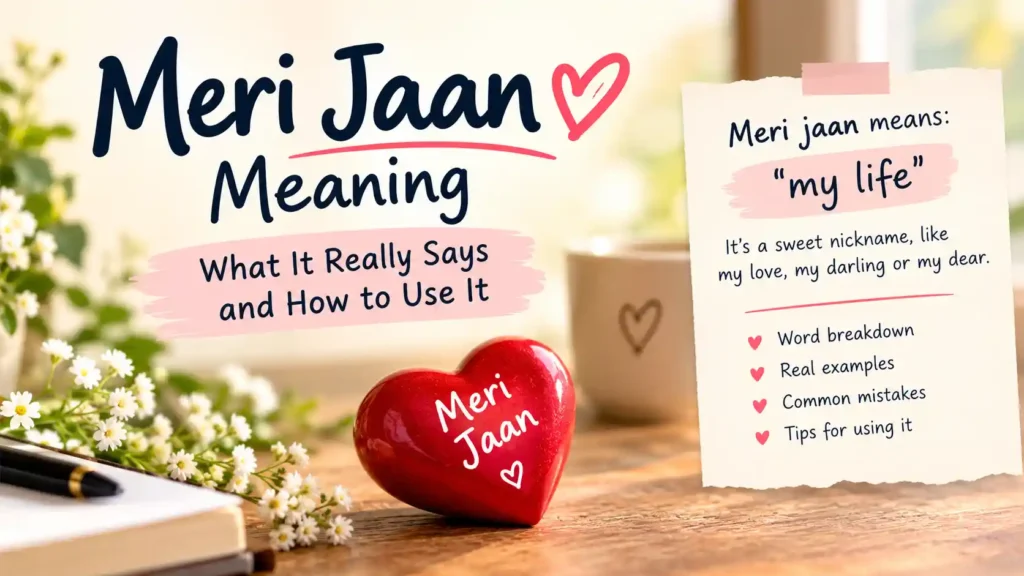
Meri jaan meaning in English is “my life.” People use it as a sweet nickname, much like “my love,” “my darling,” or “my dear.” You may have heard it in a movie, a song, or a chat between friends, and wondered what it really says. That is a fair question, because the words look simple but carry deep feeling. In this guide, you will learn what each word means, how to say it, and when it is fine to use. You will also see real examples, a few common mistakes, and some easy tips so you never feel awkward using it. By the end, you will know exactly what meri jaan means and how to use it with care.
Quick Answer: Meri Jaan Meaning in Simple Words
Meri jaan comes from Urdu and Hindi. “Meri” means “my.” “Jaan” means “life” or “soul.” Put together, the phrase means “my life.” But people rarely mean it word for word. They use it to say, “You are very dear to me.” It works as a pet name, a loving call, and sometimes just a warm way to talk to someone you care about.
The closest English words are “my darling,” “my love,” “my dear,” and “sweetheart.” None of them match it perfectly, though. In English, “my life” sounds a bit odd as a nickname. In Urdu and Hindi, it sounds natural and sweet. The feeling behind it is easy to grasp: this person matters to me as much as my own life.
Here is the phrase at a glance.
| Detail | Information |
| Roman spelling | Meri jaan |
| Urdu script | میری جان |
| Hindi script | मेरी जान |
| Simple sound | MEH-ree jahn |
| Word-for-word meaning | My life |
| Everyday meaning | My darling, my love, my dear one |
| Languages | Urdu and Hindi |
Breaking Down the Words: Meri and Jaan
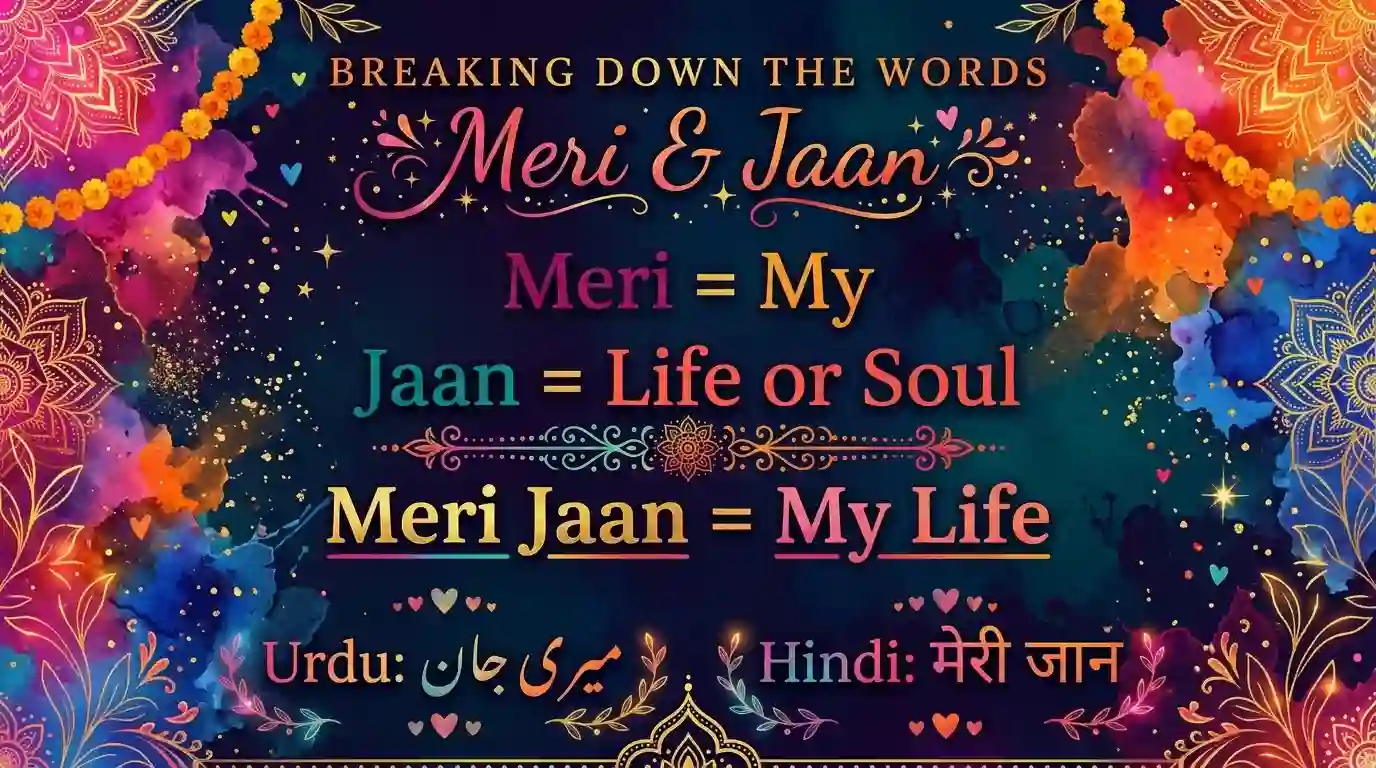
It helps to look at each word on its own. “Meri” is a possessive word. It means “my.” In Urdu and Hindi, the word for “my” changes shape depending on the thing that belongs to you. “Mera” goes with a masculine word, like “mera dost” (my friend, male). “Meri” goes with a feminine word, like “meri dost” (my friend, female). Since “jaan” is a feminine word in these languages, it takes “meri.”
This is a small but important point. The word “meri” does not depend on who is speaking. A man can say “meri jaan,” and so can a woman. What decides the word is “jaan,” not the speaker.
Now for “jaan.” It means life, soul, or spirit. But it also means “beloved” or “very dear person.” Think of how English speakers say “you are my everything.” That is close to the feeling. When someone says “jaan,” they are saying that the person is part of their very being.
You will also meet “jaan” inside many other phrases. Here are a few common ones.
| Phrase | Rough Meaning |
| Jaan | Life, dear one |
| Jaanu | A cute, soft pet name for a loved one |
| Jaan-e-man | Life of my heart, my beloved |
| Jaan-e-jaan | Life of my life |
| Jaan se pyaara | Dearer than life |
| Meri jaan | My life, my darling |
How to Say and Write Meri Jaan
Saying it is easy. Break it into two parts: “MEH-ree” and “jahn.” The “j” sounds like the “j” in “jump.” The “aa” in “jaan” is a long, open sound, like the “a” in “father.” So the full phrase sounds like “MEH-ree jahn.”
When you write it in English letters, you will see small spelling changes. Some people write “meri jaan.” Others write “meri jan” or “meri jaaN.” All of them point to the same phrase. The most common form online is “meri jaan,” so it is a safe choice.
In Urdu, the phrase is written as میری جان, and it reads from right to left. In Hindi, it is written as मेरी जान, and it reads from left to right. The meaning stays the same in both scripts.
One helpful tip: keep your voice soft when you say it. The phrase carries warmth. A harsh or loud tone can change its feeling. Many native speakers also stretch the word “jaan” a little, which makes it sound more tender.
Where the Word Jaan Comes From
The word “jaan” has roots in Persian. In Persian, the word is written “jān,” and it means life or soul. Urdu and Hindi have borrowed many words from Persian over the centuries, and “jaan” is one of the best-loved ones. It has since become a normal part of everyday speech across South Asia.
Another place you may see it is in the ending “-jan” or “-jaan” added to a name. In some regions, people add it to a name to show warmth or respect. For example, a name with “jan” at the end can sound like “dear” was added in front. The exact use changes from place to place and from language to language, so it is best to follow the local habit if you are unsure.
It is hard to say exactly when people first used “meri jaan” as a pet name. No reliable source gives a clear date, so it is wiser not to guess. What we can say is that the idea of calling a loved one “my life” is very old in poetry and speech across the region, and it is still alive today.
Who Can Say Meri Jaan to Whom?
This phrase is not just for couples. That surprises many learners. In real life, people use it in several kinds of close bonds.
Couples use it most often. A husband may call his wife “meri jaan,” and a wife may call her husband the same. Dating partners use it as well, and it often shows up in love messages.
Parents also use it with children. A mother might say “meri jaan, come here” to a small child. In this case, the phrase feels like “my sweet little one.” There is no romance in it at all. It is pure love.
Close friends use it too, often in a playful way. Two best friends might greet each other with “kaise ho, meri jaan?” which means “How are you, my dear?” Among friends, it can feel casual and fun.
Grandparents, aunts, and uncles may use it with the young ones in the family. And siblings sometimes use it, either with real warmth or as a joke.
The phrase is less fitting between strangers, coworkers, or people who barely know each other. We will talk about that more in the sections ahead.
Real-Life Examples of Meri Jaan
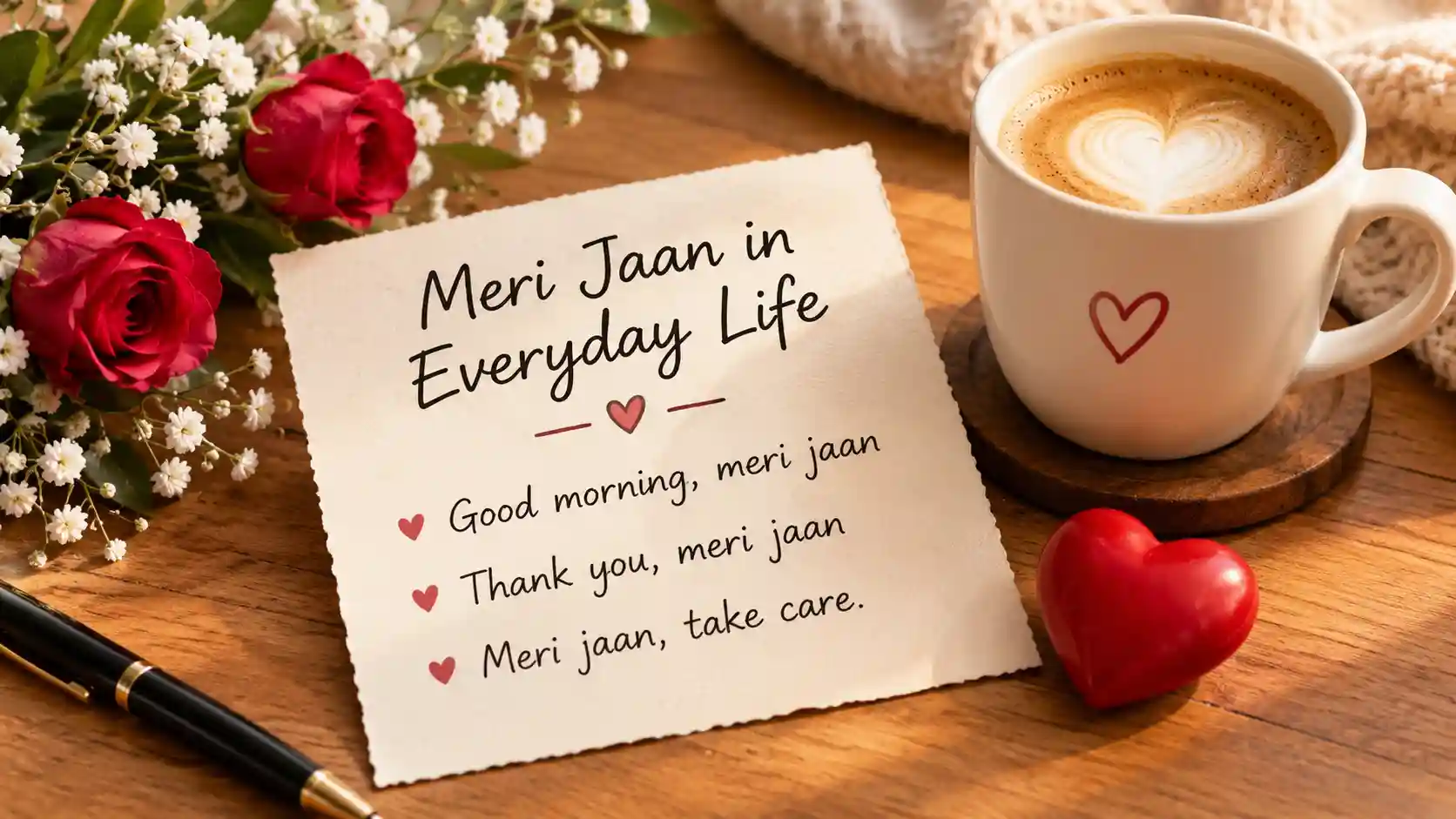
Examples make a phrase easier to remember. Here are some everyday ways people use it, with simple English meanings.
A husband says, “Meri jaan, you look tired. Sit down and rest.” He means, “My dear, you look tired.” It is gentle and caring.
A mother says, “Meri jaan, eat your food.” She is talking to her child. The phrase makes the request feel soft instead of strict.
A friend says, “Thank you so much, meri jaan! You saved me today.” Here, it is a warm way to say thanks to a close friend.
A partner writes in a text message, “Good morning, meri jaan.” That is like writing “Good morning, my love.”
Sometimes, “jaan” also means plain old “life.” If someone says, “Meri jaan nikal gayi,” it means “I got a huge fright,” and the words are close to “my life left me.” It is a way of saying that something scared you badly. Another example is “meri jaan khatre mein hai,” which means “my life is in danger.” In these lines, “meri jaan” is not a pet name. It is the real word for life. Context tells you which meaning is meant.
Meri Jaan vs Similar Phrases
Several phrases in Urdu and Hindi sound close to “meri jaan.” Each has a slightly different feel. Knowing the difference helps you pick the right one for the moment.
| Phrase | Rough English Meaning | Feel and Use |
| Meri jaan | My life, my darling | Warm and loving; used by couples, parents, and close friends |
| Jaanu | Darling, sweetie | Cute and playful; often used between partners |
| Jaan-e-man | Beloved, life of my heart | More poetic; common in songs and poems |
| Mere dost | My friend | Friendly, but not romantic |
| Meri zindagi | My life | Deep and serious; often used for a life partner |
| Meri pyaari | My dear one (female) | Sweet; used for a girl or woman |
| Mere bachche | My child | Used by parents for their children |
Notice that “meri jaan” and “meri zindagi” both include the word “my life.” Yet “zindagi” sounds heavier, as if the person is the whole of your life. “Jaan” can be lighter, so it fits more kinds of relationships.
Meri Jaan in Songs and Movies

Many people first hear this phrase in films and music. Hindi and Urdu songs love the word “jaan.” Writers use it again and again because it fits so well with love, longing, and joy. In a song, “meri jaan” may call out to a lover, sing a lullaby, or show deep pain at being apart.
Songs often stretch the word and add a lot of feeling to it. That is one reason learners remember it so easily. Even if you do not know the language, you can hear the care in the voice.
Still, movies and songs can make the phrase seem more dramatic than it is in daily life. In real talk, people say it quickly and often in a calm way. A mother does not sing it. She just says it while handing over a cup of milk. So when you use it, you do not need a big, theatrical tone. A soft, natural voice sounds best.
One more point: because songs use it so often, some people link the phrase only with romance. That is not the full picture. Parents, friends, and relatives use it all the time, as you saw earlier.
Common Mistakes to Avoid
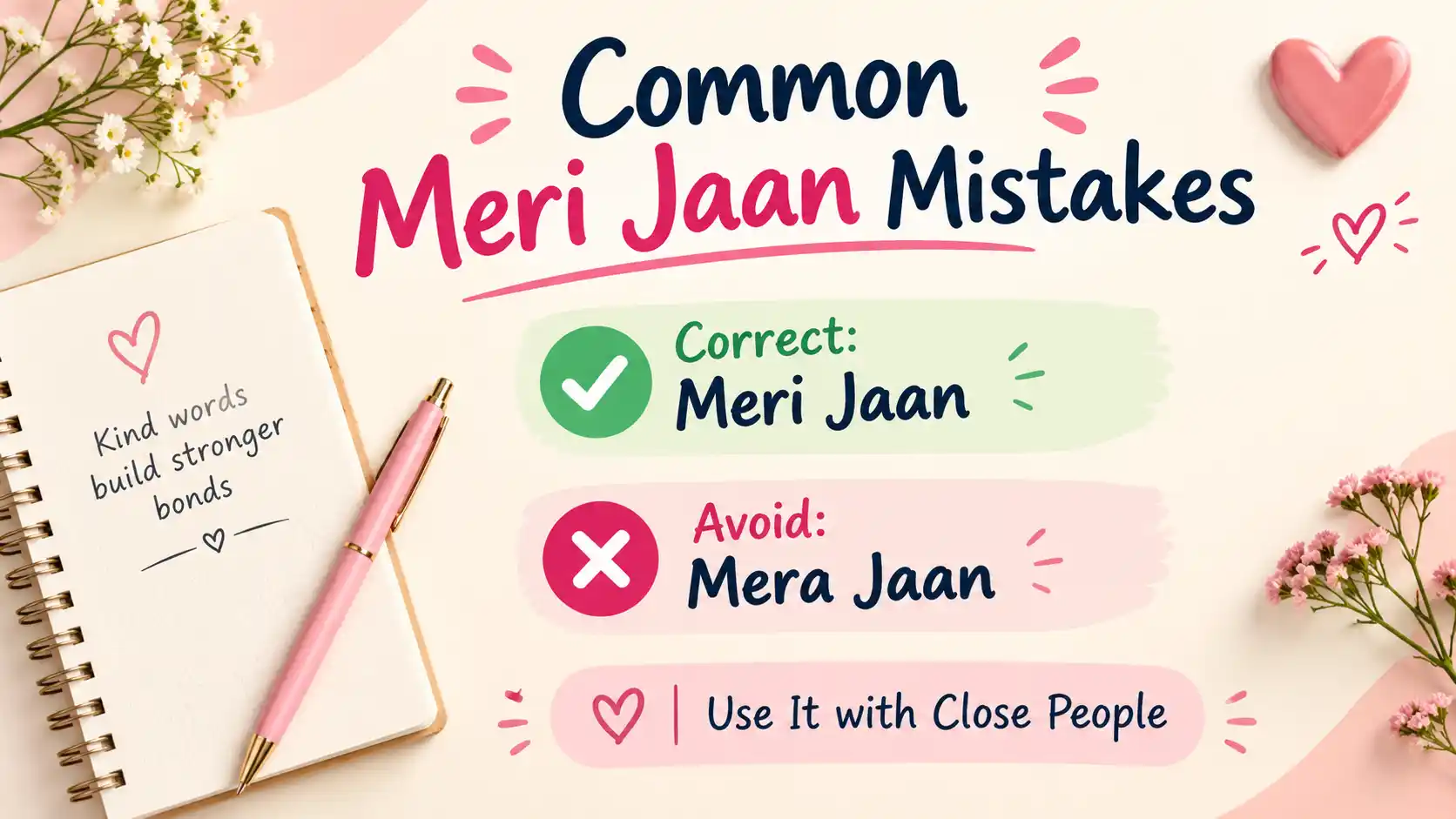
Even a short phrase can trip up learners. Here are the mistakes people make most often, along with simple fixes.
| Mistake | Why It Is Wrong | Better Choice |
| Saying “mera jaan” | “Jaan” is a feminine word, so it needs “meri” | Say “meri jaan” |
| Using it with a stranger | It can feel too personal or even rude | Use a polite greeting instead |
| Using it at work | It can seem unprofessional or flirty | Use the person’s name |
| Thinking it is only romantic | Parents and friends use it too | Read the context first |
| Translating it as “my life” in every chat | In English, this can sound strange | Use “my dear” or “my love” |
| Using it as a joke with someone sensitive | They may take it seriously | Know your audience |
The first mistake is the most common. Many English speakers say “mera jaan” because they know “mera” means “my.” But the word has to match the noun that follows. Once you remember that “jaan” is feminine, the fix is easy.
The second mistake can cause real awkwardness. If a person you hardly know calls you “meri jaan,” it may feel strange. The same is true the other way around. Always think about how close you are to the person before you use the phrase.
Tone and Context: When Meri Jaan Can Feel Different
Words carry more than their meaning. Tone, place, and relationship all shape how “meri jaan” lands.
“Meri jaan” expresses gentle affection between romantic partners and offers a sense of comfort between parents and children. Close friends may also use it playfully to show warmth and care. But in other settings, the very same words can feel out of place.
Sometimes people use it with a sharp edge. A person may say “meri jaan” in a teasing or even mocking way, such as when they are annoyed with a friend. The words stay the same, but the voice makes the meaning different. If you hear it said with a tight smile, it may not be a kind remark.
There is also the matter of respect. In many families and communities, a person is careful about how they speak to someone of a different age or background. A young man calling an unknown woman “meri jaan” on the street, for example, is seen as disrespectful and may cause real offense. So think before you speak.
The safest path is simple. Use the phrase only with people who have clearly shown they are close to you, and who you know will enjoy it. If you are not sure, a plain “dear” or the person’s name is always better.
Tips for Using Meri Jaan the Right Way
Here are some easy habits that will help you use the phrase well.
First, listen before you speak. If you are learning Urdu or Hindi, notice how native speakers use it. Watch who says it, to whom, and in what tone. That will teach you more than any list of rules.
Second, match the word to the relationship.
You can use “meri jaan” with your child as a loving nickname or share it with your partner to express affection. However, it is best to avoid using this phrase with a new coworker because it may sound too personal.
Third, remember the grammar. Use “meri,” not “mera.” It is a tiny detail, yet it shows that you care about the language.
Fourth, keep the sound soft. Say it slowly and kindly. A warm voice makes the phrase feel real.
Fifth, if you are writing for an English reader, add a short note. A line like “meri jaan (my dear)” helps people who are new to the words. This is also a good idea if you are writing a story, a blog post, or a card.
Last, be respectful. If someone tells you they do not like being called this, stop right away. Good manners matter more than any nickname.
FAQs
1. What does meri jaan mean in English?
It means “my life,” but people use it like “my darling,” “my love,” or “my dear.” It is a warm pet name for someone you care about deeply.
2. Is meri jaan a romantic phrase?
It can be, and many couples use it. But it is not only romantic. Parents say it to children, and close friends say it to each other. The relationship and tone tell you what it means.
3. Is it “meri jaan” or “mera jaan”?
The right form is “meri jaan.” The word “jaan” is feminine in Urdu and Hindi, so it takes “meri,” not “mera.” This is true for any speaker, male or female.
4. Which language is meri jaan from?
It comes from Urdu and Hindi. The word “jaan” itself has Persian roots and became part of these languages over many years.
5. Can I call a friend meri jaan?
Yes, if you are close and both of you are comfortable with it. Many friends use it in a playful way. If you are unsure, ask or use a simpler word like “dear.”
6. Can meri jaan ever mean something other than “my dear”?
Yes. Sometimes “jaan” just means “life.” In a line like “meri jaan khatre mein hai,” it means “my life is in danger.” Always check the full sentence to know which meaning fits.
Conclusion
Now you know the full story behind meri jaan meaning. The phrase comes from Urdu and Hindi, and it literally means “my life.” In daily speech, it works like “my darling” or “my dear,” and people use it with partners, children, and close friends. You also learned how to say it, how to write it, and why “meri” is the correct form instead of “mera.”
Just as important, you saw that tone and context matter. The same words can sound loving, playful, or even rude, depending on who says them and how. So use the phrase with people who are truly close to you, keep your voice kind, and avoid it in formal or unknown settings. If you remember those few points, you will use meri jaan with confidence and care.

Hi, I’m Lucy, a content writer at ContentWireMedia. I enjoy exploring the meanings of words, common phrases, and everyday expressions. Through my writing, I aim to make language easy to understand by providing simple explanations, practical examples, and helpful insights that make learning enjoyable and help readers discover something new every day.