
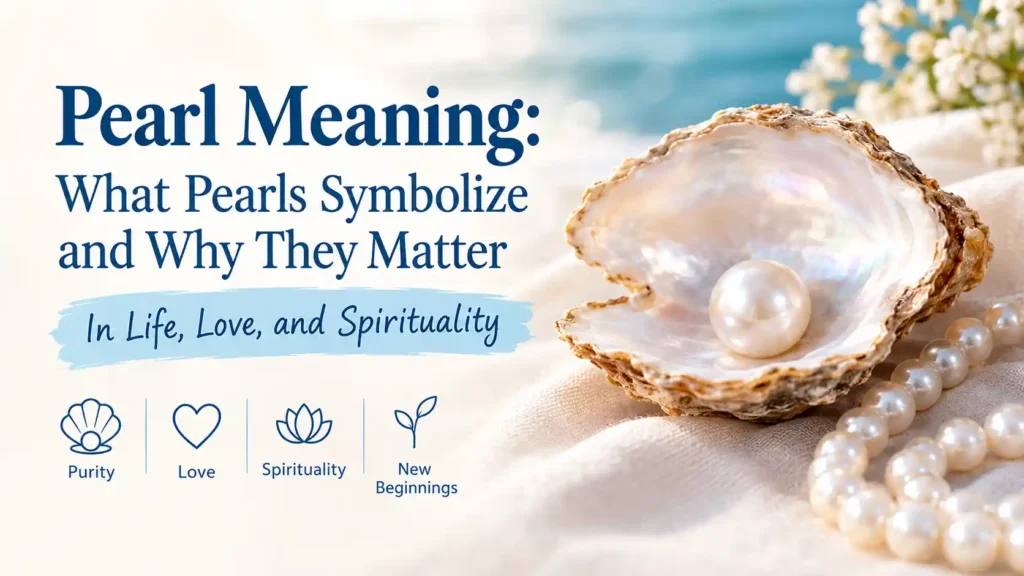
Pearl meaning is simple at its core. A pearl is a smooth, shiny gem that grows inside a living sea or freshwater animal, and it stands for purity, wisdom, calm, and new beginnings. People also use the word “pearl” for anything rare, precious, or wise.
So why do so many people search for this? Maybe someone gave you a pearl necklace. Maybe your birthday falls in June. Or perhaps you heard the phrase “pearls of wisdom” and wondered where it came from. Whatever your reason, you are in the right place. Pearls have charmed people for thousands of years, so their meaning runs deep. In this guide, you will learn what pearls are, what they symbolize, and how different cultures see them. You will also find easy examples, helpful tables, and tips for using the word the right way.
Quick Answer: Pearl Meaning in Simple Words
The pearl meaning has three main layers. Let’s break them down in plain words.
First, a pearl is a real object. It is a round gem that grows inside a mollusk, such as an oyster or a mussel. Second, a pearl is a symbol. It often stands for purity, peace, wisdom, and beauty that grows slowly over time. Third, “pearl” is a word we use in daily speech. We use it for anything very valuable, like a “pearl of wisdom” or a “pearl of a friend.”
If you only need one sentence, use this one: a pearl is a rare gem that symbolizes purity, wisdom, and quiet strength. In other words, it is both a beautiful object and a meaningful idea.
What Is a Pearl, Exactly?
A pearl is a hard, shiny bead that certain soft-bodied sea animals make. The best-known makers are oysters and mussels. Some live in salty oceans, while others live in lakes and rivers.
Here is how it works. First, something small and irritating slips inside the animal’s shell. Next, the animal protects itself by covering the irritant with thin layers of a smooth material called nacre. Some people call nacre mother-of-pearl. Then, layer after layer builds up over months or years. Finally, a pearl appears.
This is one reason pearls feel so meaningful. A pearl begins as a problem and turns into something beautiful. As a result, many people see it as a lesson about patience and growth. If you ever feel stuck in a hard season, the story of the pearl can give you a little hope.
Natural, Cultured, and Faux Pearls Explained
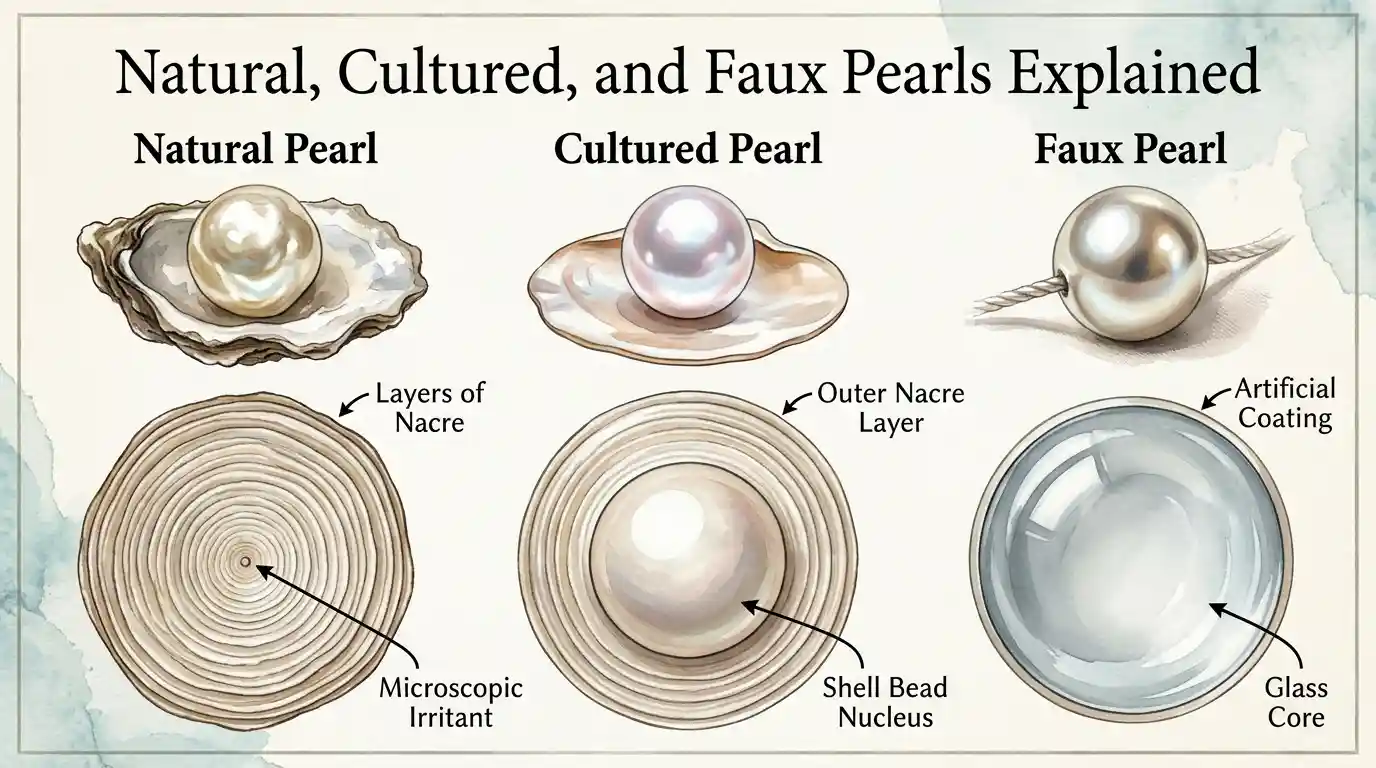
Pearls differ from most gems in a big way. Diamonds, rubies, and emeralds come from the earth, and miners dig them out of the ground. A pearl, on the other hand, comes from a living creature, and it needs no cutting to shine. For this reason, people call it an “organic gem.”
Natural pearls form on their own without any human help. Today, they are very rare. Most pearls in stores are cultured pearls. In that case, farmers place a small bead or piece of tissue inside the animal on purpose, and the animal then builds nacre around it.
Still, a cultured pearl is a real pearl. The animal does the work, and people simply start the process. In contrast, a faux pearl is a fake made of glass or plastic. Therefore, it helps to ask a seller which kind you are buying, especially if you care about the meaning behind the gem.
Pearl Meaning as a Word in Everyday English
The word “pearl” is a noun. Besides the gem itself, English speakers use it in several ways. Some uses are literal, and others are figures of speech. For example, a painter might talk about “pearl white” paint, while a poet might call raindrops “pearls.” The table below shows the most common uses.
| Use of “Pearl” | Meaning | Example Sentence |
|---|---|---|
| The gem | A shiny bead from a mollusk | She wore a pearl on a thin gold chain. |
| A color | A soft, creamy white with a glow | The walls were pearl white. |
| Something precious | A rare or excellent thing | Her grandmother was a pearl of a woman. |
| Small round drops | Beads that look like pearls | Pearls of water gathered on the leaf. |
| A first name | A girl’s name that means “pearl” | Pearl waved to her neighbor. |
As you can see, the word always points to something smooth, round, shiny, or precious.
Famous Sayings That Use the Word Pearl
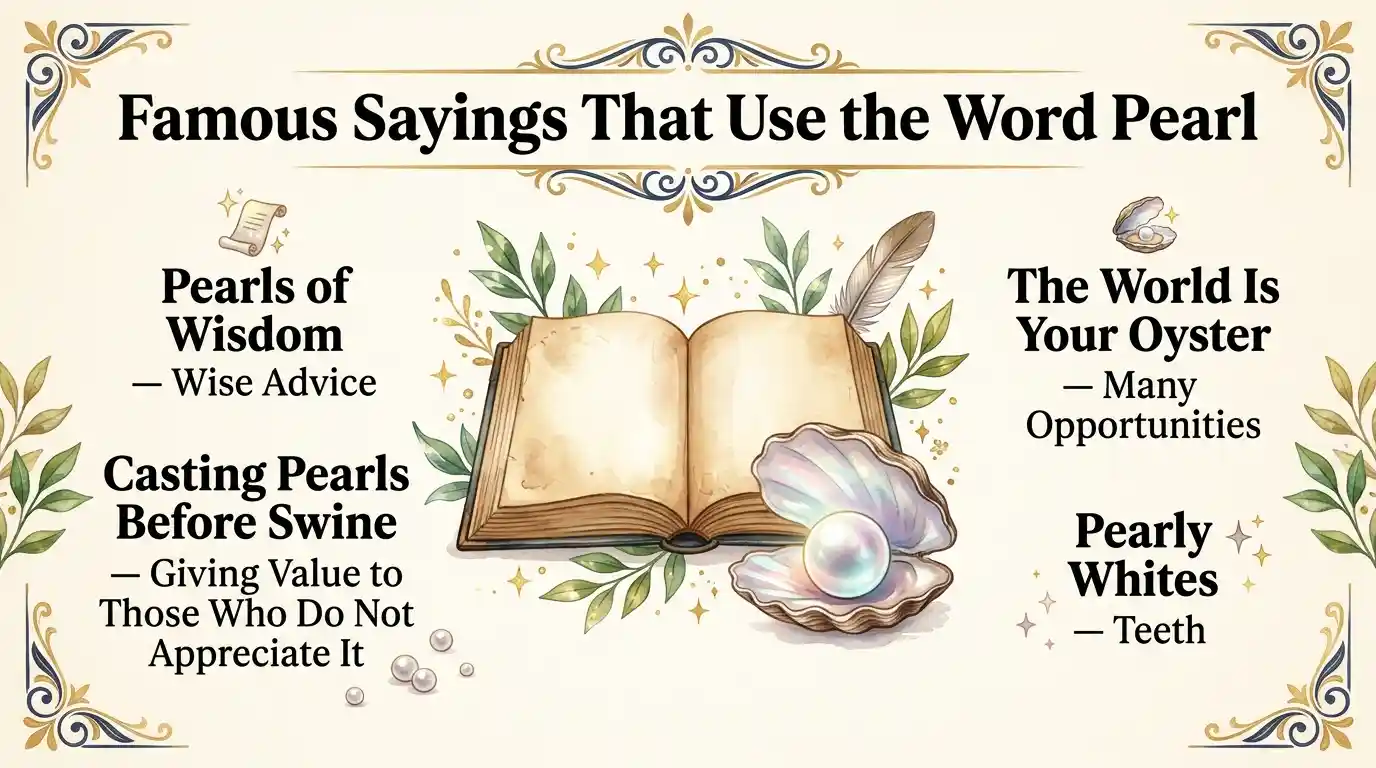
Several well-known sayings use the word pearl. Let’s look at the most common ones.
“Pearls of wisdom” means wise advice. When someone shares a pearl of wisdom, they offer a short, smart lesson. Sometimes people say it with a smile, so the tone can be warm or a little joking.
“Casting pearls before swine” is an older saying from the Bible. It means giving something valuable to someone who will not appreciate it. For instance, you might hear it when a person ignores good ideas.
“The world is your oyster” means you have many chances ahead. The pearl hidden inside the oyster is the prize that waits for you.
Finally, “pearly whites” is a playful way to say teeth. It works because healthy teeth look smooth, white, and shiny, just like pearls.
Pearl Symbolism in China and India
Pearls have held special meaning in many places. Although details change from culture to culture, a few themes appear again and again. These include purity, wealth, wisdom, and protection.
In ancient China, people linked pearls with wisdom and power. Dragon art often shows a dragon chasing a glowing pearl. Many people read that pearl as a symbol of wisdom, good fortune, or the highest goal a person can reach. Royal courts also treasured pearls as gifts.
In India, pearls have a long history in jewelry and belief. In Vedic astrology, the pearl connects to the Moon. Followers of this tradition often wear a pearl to bring calm and balance to the mind.If or not you follow it, this idea shows how strongly people tie pearls to peace.
Pearl Symbolism in Rome and the Middle East

In ancient Rome, pearls showed great wealth. They cost so much that owning a strand proved you were rich. There is a famous story that Cleopatra dissolved a pearl in vinegar and drank it to win a bet. However, historians doubt the story is true. It is best to see it as a tale about how much value people placed on pearls.
In the Middle East, pearl diving once shaped daily life, especially along the Persian Gulf. Divers risked a lot to bring up oysters, and pearls helped build local trade. Moreover, Islamic teaching mentions pearls as treasures of paradise, which adds a sacred layer to their meaning.
Today, the pearl still reminds many people in that region of hard work, courage, and heritage.
Pearl Meaning in Christianity and Western Weddings
In Christianity, the “pearl of great price” is a story Jesus told. A merchant sold everything he owned to buy one perfect pearl. The story teaches that some things are worth more than all you own. Also, popular culture talks about the “pearly gates” of heaven. That image comes from the Book of Revelation, which describes gates made of pearls.
In Western wedding customs, pearls became a classic bridal gift. Many brides wear them as a sign of purity and a wish for a happy marriage. An old superstition says pearls bring tears to a bride. Still, many modern families ignore this belief and enjoy pearls as a sign of love and tradition.
Across all these places, the pearl stays close to one idea. It is something rare and lovely that grows slowly and deserves protection.
The Spiritual Meaning of Pearls
Many people also see pearls as spiritual symbols. Of course, these ideas are beliefs, not scientific facts. Still, they matter a lot to many readers.
Patience and growth. Because a pearl forms slowly, it reminds people that good things take time. If you are going through a hard season, the pearl can gently show that struggle may turn into something valuable.
Inner wisdom. A pearl hides inside a shell. For that reason, some people say wisdom lives within us and may not be easy to see at first.
Calm and peace. Pearls are soft in color and smooth to touch. Because of this, many people connect them with a quiet mind and an even temper.
Purity and honesty. White pearls often stand for a clean heart and honest goals. That is why they show up at weddings, baptisms, and graduations.
The Moon and water. Pearls come from water, and their glow looks a bit like moonlight. As a result, many spiritual traditions link them to the Moon, emotions, and intuition.
If you choose a pearl for its spiritual meaning, remember that your own feeling matters most. If a pearl makes you feel calm, brave, or hopeful, that meaning is real for you.
Pearl Meaning as a Birthstone and Anniversary Gem
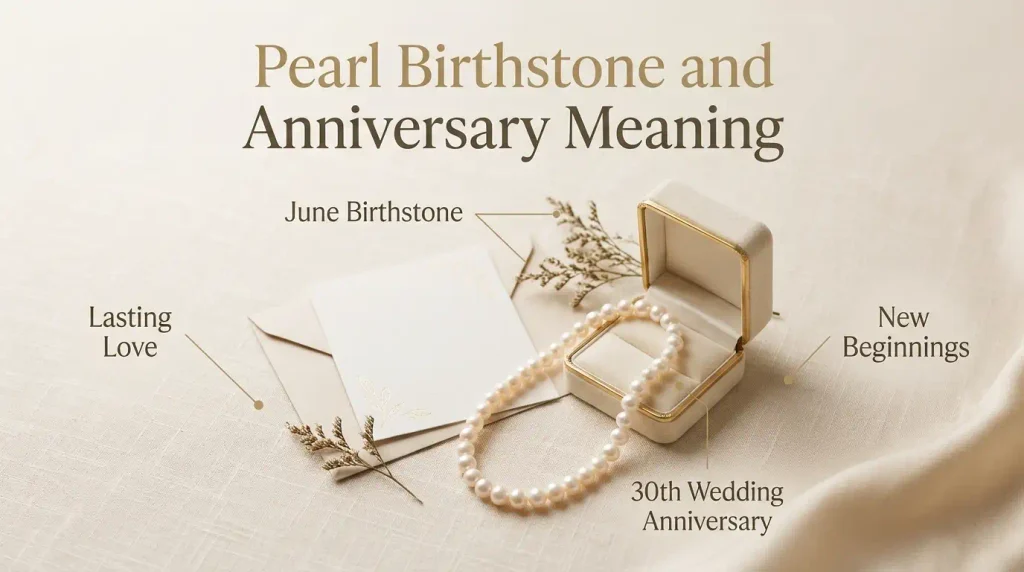
Pearls play official roles in gift-giving. First, they are one of the birthstones for June. The other June stones are alexandrite and moonstone. So if your birthday falls in June, a pearl is a traditional gem for you.
Second, pearls are the traditional gift for a 30th wedding anniversary. The idea is simple. After thirty years, a marriage, like a pearl, has grown strong through many layers of time. The table below shows other times when people give pearls.
| Occasion | Pearl’s Role | What It Represents |
|---|---|---|
| June birthday | Traditional birthstone | Calm, purity, and new beginnings |
| 30th anniversary | Traditional gift | Lasting love built slowly over years |
| Wedding day | Common bridal jewelry | Purity, love, and good wishes |
| Graduation | Popular gift | Wisdom and a bright start |
| Mother’s Day | Popular gift | Gratitude and care |
Keep in mind that traditions differ by country and by list. Therefore, check what the family or culture you are buying for usually prefers.
Pearl Meaning by Color
Pearls come in many colors, and people often attach a different meaning to each one. These are popular beliefs rather than strict rules, so treat them as a fun guide.
| Pearl Color | Common Meaning |
|---|---|
| White | Purity, peace, and new beginnings |
| Cream or ivory | Warmth, kindness, and tradition |
| Pink | Gentle love, care, and friendship |
| Gold | Success, confidence, and wealth |
| Black or dark gray | Mystery, strength, and deep wisdom |
| Lavender | Creativity and a calm spirit |
Color depends on the type of animal and the water where it lives. In addition, sellers sometimes treat pearls to change or improve the color. So if you are buying a pearl for its color meaning, ask if the color is natural.
Main Types of Pearls
Knowing the types of pearls helps you understand what you are looking at. Each one has a slightly different look and story.
Akoya pearls. Farmers grow these mostly in Japan and China. They are usually round, white or cream, and very shiny. As a result, they are a classic choice for traditional necklaces.
South Sea pearls. These come from warm waters near places like Australia and Southeast Asia. They are larger than most pearls, and they often come in white or golden shades. They also tend to cost more.
Tahitian pearls. Farmers grow these in French Polynesia. They come in dark shades such as gray, green, and blue. Although people call them “black pearls,” they are rarely true black.
Freshwater pearls. These grow in lakes and rivers, mostly in China. They come in many shapes and colors, and they usually cost less. For this reason, they are a great pick for everyday wear.
Natural pearls. These form without any human help, so they are very rare. You will mostly see them in antique jewelry or at auctions.
The Name Pearl and Its Meaning
“Pearl” is also a name, and its meaning is just what you would guess: pearl. English speakers have used it for a long time, and it was especially popular in the early 1900s. Today, it is less common, but it has a charming, classic feel. In fact, some parents are bringing it back.
People who choose the name often hope the child will be treasured, bright, and strong. Many also use Pearl as a middle name. When you see it in a story, it often signals someone precious or wise. However, that depends on the author, so always read the character’s actions too.
Common Mistakes People Make About Pearls
Because pearls are so old and so loved, many myths float around. Here are the biggest mistakes to avoid.
First, many people think every pearl starts with a grain of sand. This is a popular story, but it is not usually true. Most pearls begin with something else, such as a tiny parasite or a bit of tissue.
Second, some people believe cultured pearls are fake. In fact, cultured pearls are real. The animal makes the nacre in the same way. Only faux pearls are fake.
Third, people expect every pearl to be round and white. However, pearls come in many shapes, such as oval, drop, and baroque, and in many colors. Perfectly round pearls are rarer, so they often cost more.
Fourth, some people treat pearls like hard gems. Pearls are soft compared with diamonds. They scratch easily, and chemicals can hurt them.
Finally, people assume one meaning fits everyone. In truth, the meaning changes with culture, faith, and personal feeling. It is fine to hold more than one meaning at once.
How to Care for Pearls So Their Meaning Lasts
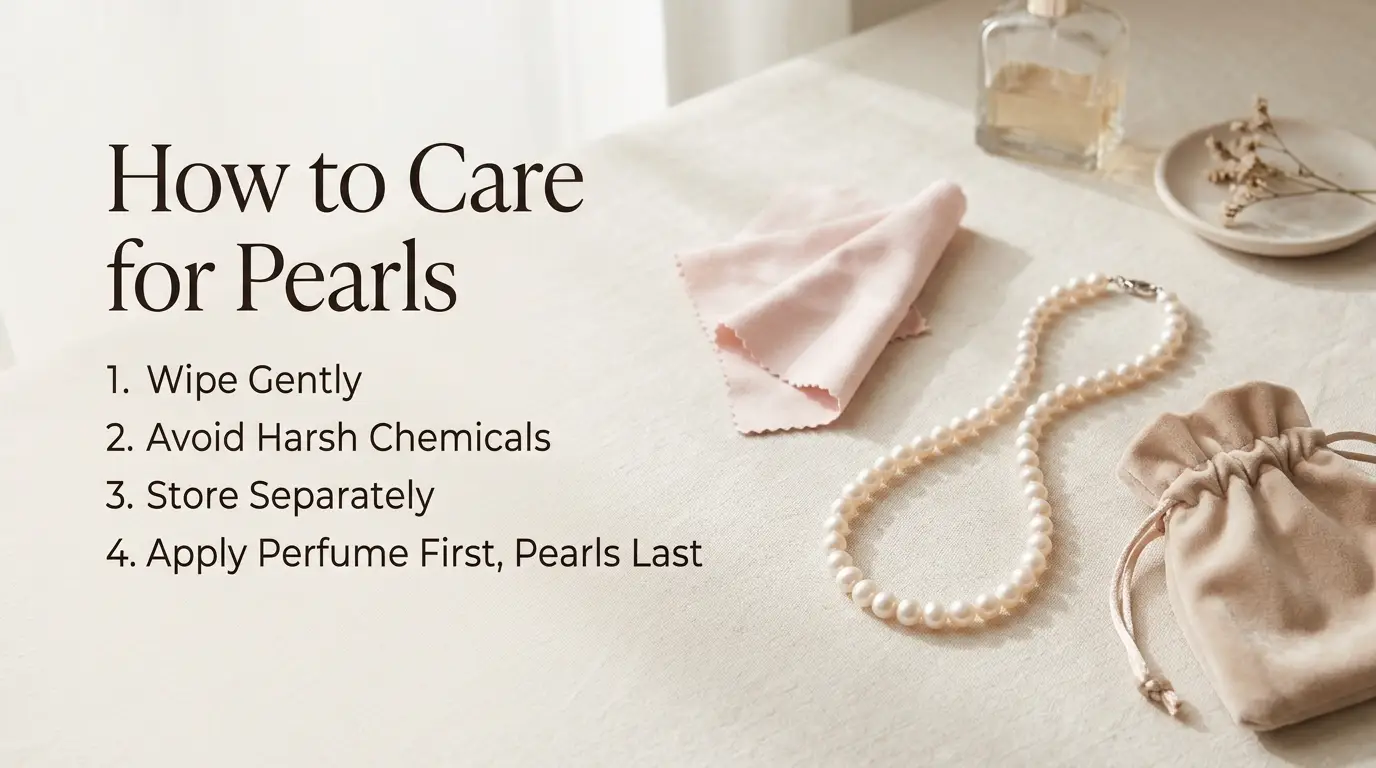
A pearl can last for generations if you treat it kindly. Because pearls are soft and come from a living animal, they need gentle care.
First, put your pearls on last, after perfume, hairspray, and makeup. Those products can dull the shine. Next, wipe each pearl with a soft, clean cloth after you wear it. Then, store your pearls in a soft pouch, away from harder jewelry that could scratch them. Also, avoid harsh cleaners, and do not soak pearls for long.
Jewelers usually tie small knots between the beads on a strand. Over time, the thread can wear out. So if you wear your strand often, ask a jeweler to check it and restring it every few years. That small step can save your pearls from falling apart.
Real-Life Examples of Pearl Meaning
Seeing the meaning in action makes it easier to remember.
Imagine a grandmother who gives her granddaughter a small pearl necklace on graduation day. The gift says, “You have grown slowly and well, and I am proud of you.” That is the symbol of patient growth.
Next, imagine a teacher who gives a student a short, wise tip and says, “Here is a pearl of wisdom.” That is the everyday phrase. It means a helpful and valuable lesson.
Then, picture a friend with a June birthday who loves wearing freshwater pearl earrings. For her, the pearl is both a birthstone and a bit of calm in daily life.
Finally, think of a bride who wears her mother’s pearls on her wedding day. The pearls carry love, family history, and good wishes. In each case, the pearl meaning depends on the person and the moment.
FAQs About Pearl Meaning
What does a pearl symbolize?
A pearl symbolizes purity, wisdom, calm, and new beginnings. It can also stand for patience, because it grows slowly. In some cultures, it means wealth, protection, or good luck.
What is the spiritual meaning of a pearl?
Many people see a pearl as a sign of inner wisdom, peace, and growth through hard times. Some traditions also link it to the Moon and to emotions. These are beliefs, so they vary from person to person.
What does it mean when someone calls you a pearl?
It is a kind compliment. It means you are precious, rare, and valued. People often say it about someone who is kind, honest, and special.
What month is the pearl birthstone for?
Pearl is a traditional birthstone for June. Alexandrite and moonstone are also June birthstones, so you can choose whichever feels right.
Are cultured pearls real?
Yes. A living animal makes a cultured pearl, and people only help start the process. Fake pearls, on the other hand, use glass or plastic.
Is it bad luck to wear pearls?
No. The idea that pearls bring tears is an old superstition, not a fact. Many people wear pearls for joy, love, and tradition.
Conclusion
The pearl meaning is rich, but it is not hard to remember. A pearl is a gem that a living animal grows, and it stands for purity, wisdom, peace, and growth that takes time. In everyday English, “pearl” also means something rare and precious, as in “pearls of wisdom.”
Across history, cultures from China to Rome to the Middle East have treasured pearls as signs of beauty and worth. Today, pearls still mark special moments, such as June birthdays, 30th anniversaries, and weddings. Colors and types can shift the meaning a little, but the heart of it stays the same.
If you want to choose or gift a pearl, think about the story you want it to tell. Ask the seller if it is natural, cultured, or faux. Then care for it gently. A well-loved pearl can carry meaning for many years.

Hi, I’m Lucy, a content writer at ContentWireMedia. I enjoy exploring the meanings of words, common phrases, and everyday expressions. Through my writing, I aim to make language easy to understand by providing simple explanations, practical examples, and helpful insights that make learning enjoyable and help readers discover something new every day.